Showing posts with label Meet The Author. Show all posts

Wednesday, August 3, 2011

Author Alex Adena Talks About Writing ‘Signs & Wonders’, being a “user of nom de plumes” and Alfred Hitchcock

AlexAdenaThank you for spending time with us and sharing some insights into the writing of ‘Signs & Wonders’. If you’re ready I guess we should jump right in.

Lynnette Phillips: What inspired this novella? Is this your writing debut?

Alex Adena: I’ve written for the stage as well as a few screenplays, but this is my first novella. “Signs and Wonders” actually started out as a screenplay. I wanted to write a story about the nature of faith and what happens when you begin to doubt everything you’ve been taught. This story takes that to an extreme – what happens when everything in your life has been a lie and you have to start over from scratch?

LP: Some authors have told me that they build their charactersSigns and Wonders based on people they know. Is that how Annie Grace came to be? Or was there a formula you followed for character development? How did you come up with the characters in Signs and Wonders?

AA: Annie Grace isn’t based on a real-life person. The idea for her came when, out of curiosity, I watched a few minutes of Benny Hinn’s program. That’s when the idea came to me: What if a faith healer –- one who knew their act was a complete con – discovered they really COULD heal people? I knew my faith healer would be a woman because it’s an area dominated by men and I wanted to explore something new. So once I had this strong Texas woman, I thought it would be interesting to pair her up with a slightly older Latino man. Not as a love interest, but as a substitute father figure. That’s how Ernesto came to be. I did have a few actors and actresses in the back of my mind as I wrote some of the minor characters, which is a trick a lot of writers use.

LP: Do you maintain a writing schedule? When you pick up the pen do the ideas just seem to flow?

AA: A lot of my writing during the past few years has been done during furloughs from work. We would have to take a week off, unpaid, so I would stay home and write. That’s how “Signs and Wonders” got its start this spring – probably half of it was written during that furlough week. After that, I set a goal to write at least an hour every day until it was completed.

LP: Do you have a favorite genre or style (short stories for example) that you you feel more comfortable writing?

AA: I’m definitely more comfortable writing novellas or short novels as opposed to epics. I’m never going to write 800 pages. I’d get bored and I think the reader would get bored. Until “Signs and Wonders” came along, I wrote material that was pretty edgy. But, you know, there’s a lot to be said for writing something that you can show your mother! Good stories can be told without a single word of profanity. My next book will be a sequel to “Signs and Wonders” and then I plan to write a family friendly romantic comedy.

LP: Is there a particular genre, maybe mystery or a who-dun-it,that you would like to try your hand at writing?

AA: Someday I’d like to give science fiction a shot, something in the style of Philip K. Dick.

LP: You claim to be a “user of nom de plumes”…why is that? When do you use them?

AA: Authors have to market themselves these days, especially if they self-publish, so I wanted a pen name that was Google-friendly. My birth name (Jeffrey Bruner) is also the name of a college professor in West Virginia, so I created Alex Adena. Search for Alex and the only thing that pops up is my blog and Facebook page.

LP: As an aficionado of Alfred Hitchcock do you have a favorite Hitchcock movie? Do you watch old reruns of his television show? (Even when I was very young I loved the way he could supply us with an off-the-wall mystery every week and have the culprit dealt [not always by traditional punishment measures] with in so short a time.)

AA: I never got into the television show, but I’ve seen all of his films. My favorite is definitely “Rear Window,” with Jimmy Stewart and Grace Kelly. The dialogue really crackles and the filmmaking, the technical side of things, is extraordinary. I never tire of seeing the scene known as “The Kiss,” when the characters meet for the first time. Hitchcock also created such an extensive body of work that a lot of films get overlooked. “Shadow of a Doubt,” with Teresa Wright and Joseph Cotten, is a real masterpiece about good and evil, all set in a quaint California town. It’s definitely worth watching if you’ve never seen it.

Thank you Alex…”Rear Window” is one of my favorites too; Raymond Burr was great as the husband. I’m going to have to take another look at “Shadow of a Doubt” though; I guess it’s been too long since I watched it. I don’t have a lot of memories of movie except that Teresa Wright was very young.

See the review of ‘Signs & Wonders’ now available on Amazon.com

Email: adena.alex@yahoo.com
Twitter: @alexadena
Facebook:
www.facebook.com/authoralex

Saturday, April 23, 2011

Award Winning Author, Zohreh Ghahremani Talks About Her Novel Sky of Red Poppies and Her New Novel to be Released Later This Year

zohreh-230px4

I so enjoyed Sky of Red Poppies. Reading it made me realize how much we’re missing by not hearing more from the hearts and minds of Persian immigrants. I was so impressed by the writing style and storytelling abilities it showcased.

Would you share a bit of your childhood with my readers…did your life resemble that of any of the characters in Sky of Red Poppies?

The house where Roya lived is my father’s house. The detailed descriptions are all true, down to the names of the servants. Roya’s life was indeed mine in the beginning – with the exception that I came from a larger family. To present Shireen’s true story as fiction gave me the poetic license to help Roya become who I always wanted to be! However, regardless of some added action to make the story flow, her emotions are absolutely true.

When did you first know you wanted to write?

I must have been born with a pen in my hand! Writing to me is what fresh air is to a runner. I can’t remember a time when I didn’t write and according to my teachers, I was put on this Earth to be a writer. Throughout my life, whether I studied, taught at the university, practiced dentistry or raised a family, I took every chance I had to write and when not writing, I dreamed of this day!

Have you had any inspirational teachers or writers in your life?

Many. I take pleasure in being inspired by others. As a young girl I was so impressionable that each time I came across a good book – and I was a heavy reader – I promised myself to someday be as good as that writer. I don’t know if that has changed at all for I still read a lot, learn from great writers and exchange imaginary notes with them!

Did you have a favorite character in Sky of Red Poppies?

One?! I love all of them, even the bad ones! Of course Shireen will forever have a special place in my heart, but how could I not love Pedar, auntie, Reza, Zahra and the rest?

I fell in love with the line of poetry that you quoted in a radio interview, "A word that comes from the heart, has no choice but to settle in another!" Do you find a lot of poetry relevant to life?

Indeed I do. I grew up in a society where poetry is part of life. Persians are really into poetry and in fact, much of our old literature is lyrical. We use poems in conversation, tell fortune from the book of Hafez and even play games that involve poetry. Whenever I feel lost for words, the verses I’ve memorized come to my rescue. This is not peculiar to me as most Persians seem to feel the same.

Will you give us a brief synopsis of your new novel, The Moon Daughter?

The Moon Daughter also comes from the depth of a woman’s heart. It is the story of a young wife, who aims to please her chauvinist husband. Unable to give him the son he wants, she faces great disappointment after each daughter is born. It is told in two parts. Part one, Rana’s Story, begins with the birth of her third child. Not only is this one a girl, she is also born with a problem. This is purely a Persian woman’s story.

Part two is Yalda’s Story, in which the daughter looks back at her mother’s past and seeks revenge. This part is seen and told from an American perspective.

Once again, the novel deals with current issues in Iran, but it probes the injustice that women in Iran as well as those in most of the Middle East encounter.

My editor is taking a final look at it and when I wrote to ask her what had caused a minor delay, she offered this explanation, “It's glorious, actually. So you could say I'm savoring it!” Let’s hope the readers feel the same when it comes out this fall.

Dear Lynette, I hope this has answered your questions and wish to thank you for your support. Furthermore, I thank your readers for their interest in the work of a new writer with an unpronounceable name! Should other questions come to mind, I will be happy to answer them and who knows? I hope we’ll meet someday.

BookReview: Sky of Red Poppies by Zohreh Ghahremani

Q&A by Lynnette Phillips, Avid Reader Book Reviews

Monday, March 21, 2011

Meet the Author: The Story is in the Details By Rona Sharon, Author of Royal Blood

I am often asked, "What sort of research went into your story to bring it to life so vividly?" 41aujPnIRbL__SL160_

The truth is months or even years of research. If I do not acquaint myself with the ins and outs of the periods I write about, how will I take readers back in time with me?

So where does an author start the research? What sort of research goes into a novel?

Gustave Flaubert (1821-80), the author of Madame Bovary, wrote, "Le bon Dieu est dans le detail."God is in the details. I find this to be true every time I begin a sentence in a novel.

I will demonstrate this with an exercise. We are writing a story together. The place is Greenwich Palace, the year is 1518, King Henry VIII has been on the throne for nine years. Our hero is an ambitious, out-of-town knight who has come to court to fight in the tournaments.

Page 1, Chapter One, first line: Hero wakes up in the morning.

What time is it? What does he see? What does he do? What does he think? And which words does he use in his thought process? In a modern day story, we would not be bothered by such trivialities. The hero wakes up in bed. His watch says 8:15 AM.He goes into the bathroom to shower, shave, brush his teeth, relieve himself, etc., and then pulls on a pair of pants.

Easy writing, boring events – unless this is all a setup, and our hero will soon find out that while he was sleeping, the world outside was destroyed by hostile aliens.

In our story, however, the historical details are the setup. Our words will draw the reader into the hero's world. If we do our job well, the reader will suspend his disbelief and follow the hero into a passionate, thrilling adventure, Tudor style, without leaving the sofa. Our next challenge will be writing a gripping story that will hold on to our reader and not let go.However, if the reader does not get a feeling of the place right off the start, he or she may feel cheated, lose interest, and exchange our novel for one with a richer, more believable setting.

The same rule applies to movies. We will believe anything so long as the camera does not tilt aside to reveal the studio behind the Temple of Doom. If we catch a glimpse of a man in a baseball cap crossing a medieval battle scene, we will immediately assume the movie is a farce. And if it isn't a parody,we will deem it a poorly done movie. We will not cry for the heroine if we see her makeup artist standing on the sideline, waiting to do touch-ups.

To preserve integrity, the author needs to know everything about the hero and everything about the world the hero inhabits. Not every detail will find its way to the final draft,but the author needs to know it before he or she can decide if it is important enough to be inserted into the text.

So back to our hero. He has just opened his eyes. What does he see? How does a Tudor chamber look like? Did people have private chambers or did they share? How can he tell the time? Did they have clocks in the room? Was 8:15 in the morning considered 8:15 then or did they have a different method for telling time? In ancient Rome, six o'clock in the morning was the first hour of the day. What was the rule in Tudor England? Also, did they have bathrooms inside their apartments, if at all? Did they have running water? Do not assume that they didn't, because actually several of King Henry's palaces did have water pipes and drainage,and the proper term for a bathroom was a garderobe. We should also determine if people cleaned their teeth in the morning and if so how.Otherwise, we won't be able to pen a single word.

The simplest detail becomes a mystery.We cannot dismiss what we don't know as unimportant, because the novel will lose its historical flavor, and worse, the story will come to a standstill. We cannot write what we don't know, and we cannot invent the answers. The Tudor court, although alien to us, did exist.Writing about it is much like writing a sci-fi novel, only the rules were invented by others and are scattered haphazardly in dusty places, like libraries and museums.

The historical fiction novelist wears two hats: the storyteller and the historian. Every word must be checked, because back in 1518 they had different . . . everything! Even the English language was different. People in 1518 did not ask, "What time is it?" They asked, "What o'clock?" Men did not wear pants; they wore hoses or trunk hoses over stocks or strosses. They did not ask, "How are you?" or "What's up?" They asked, "How now?" or"What news?" Cheating on your spouse was called a "love intrigue" -- a standard occurrence considering that most marriages were loveless, and the English people were an unblushing lot when it came to lust. And so forth.

Some readers stumble over period language, others expect it. Finding the perfect formula that appeals to everyone is another great challenge.

Now let me complicate our experiment.History stops in the year 1518. Nothing beyond this point is usable.What's more, not everything prior to this point was common knowledge in England of 1518. A great deal of the antiquity had been lost and not yet unearthed. Our job is to ascertain what our hero knows and how he came by the information. The deeper we go in the story, more questions will arise: How did they pass the time? What were the rules of jousting -- and of courting? What games of hazard did they play and how? Who was who? What was what? How did they eat,dress, and curse? The multi-use F word was not in circulation in1518. It was barely in existence.

By this point you must be thinking,"What a whole lot of boring work." Still, wouldn't you like to know about prisons, bawdy houses, poisons, intrigues, bloody battles,the secret lives of women, and love rituals of the past? Remember,God is in the details. Historical documentation is the author's treasure trove. One never knows which detail will inspire a shocking twist or a riveting scene that will come to life on the pages and create a great moment.


©2009
Rona Sharon, author of Royal Blood

Author Bio
Rona Sharon is the author of critically acclaimed historical novels of intrigue, passion, and danger. Her latest, Royal Blood, is a tale of lust and violence in the treacherous Tudor Court. From her home on the Mediterranean Coast in Tel Aviv, surrounded by thousands of years of history, Rona brings her passion for culture and travel to her writing and never fails to deliver a story that carries a punch . . . and a dagger.

For more information please visit www.ronasharon.com

(FSB Media-Reprinted with permission)

Tuesday, March 8, 2011

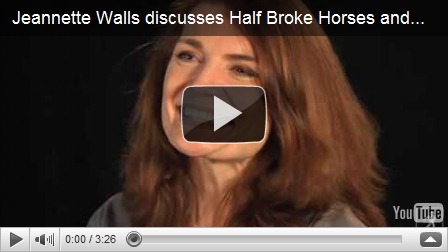
Jeannette Walls discusses her true to life novel Half Broke Horses and Thanks the Independent Booksellers #HistoricalFiction

Jeannette Walls, national bestselling author of THE GLASS CASTLE, discusses her new true-life novel, HALF BROKE HORSES

Wednesday, February 23, 2011

Meet the Author - Kate Morton Talks About The Forgotten Garden

Kate Morton talks about writing The Forgotten Garden~Avid Reader Book Reviews: The Forgotten Garden by Kate Morton - Reviewed