Showing posts with label Author Spotlight. Show all posts

Monday, July 14, 2014

An Interview with Author Sherry Burton: Her Plots Are Dependent on Strong Relationships

Sherry Burton is an award winning author of adult fiction and children's books. Both genres are dependent on strong relationships; something Sherry knows more than a little about. Sherry can attest first-hand to the fact that a whirlwind marriage can indeed last. Sherry credits her frequent moves and long separations to her ability to feel her characters' desire to find true happiness.


First of all Sherry, I have to tell you I really enjoyed your blog. Thank you for taking the time to talk with us today.

When did you start writing? As a child? Did you enter any contests or competitions? 

Unfortunately, as a child, I was never encouraged to write. To be honest I didn't apply myself in school. I was bullied up until about the eleventh grade, and more focused on getting through the day without getting beat up. I enjoyed writing rhyming poems but that was as far as it went. As a military wife I often found myself in a position where I had to write letters to my husband (long before the ships were equipped with e-mail.) Volunteering with the family support groups and being a Navy Ombudsman, I was often tasked with writing newsletters, which I enjoyed, but I still never saw it as a career. The change happened about thirteen years ago. I had a girlfriend who was going through a tough time. For reasons still unbeknownst to me, I told her I was going to write her a happy ending. I sat down with my red clipboard and pencils and started writing and writing. Somewhere early on the voices showed up and took over what I thought was going to be a simple short story. They-the voices- must have taken a liking to me as they've been hanging around in my head ever since, insisting I keep writing. 

I know you not only write adult fiction but also children’s books; where do you find your inspirations for your stories (adult and children)? 

Honestly I give all credit for my writing to the voices, as my brain does not work that way. When I first realized I had "help" writing it frightened me. It was with my first manuscript, Tears of Betrayal. I got to a part in the storyline where it was said that the in-laws knew what was going on with their son. Until that scene I thought I was in charge. But I had no idea they -the in-laws- knew what was going on. I remember putting my clipboard down and walking away. (*I wrote my first manuscript by hand) My husband, sensing something was wrong, asked if I was okay. I looked at him and said I'm not writing the story. To be honest, at the time, I think he thought I'd finally lost my mind. He kept saying what do you mean you're not writing it, I've been watching you write it. I just kept telling him that I had help, that someone else was writing the story. He never understood until the day he started reading my then finished (and published) book. He came to me and said, now I understand, you do not talk like this. You don't use words like this. Numerous discussions and four books later he believes in my voices just as much as I do. 

Do you have a favorite place to write or maybe a process you’d like to share? 

While I can get ideas anywhere, driving, working in the yard or near water (the voices really seem to love the water) I normally write in my home office. I often post that I'm in my writing chair, which is just an ordinary office chair. While I have a desk, I only use it to hold my desktop, which I rarely turn on, and all the tools needed for the day. My "tools of the trade" are generally a laptop, sharp #2 pencils, my red clipboard (yes I still use it), some sticky notes (to record changes to be made at a later date) and a binder full of bright white, lined paper. While I now prefer to write on my laptop, I am still old school in some respects. I have binders for all my manuscripts (even those which are merely ideas.) Each time I get an idea given to me that idea then goes into a specific binder. When a character is created he or she gets a page in the binder. That way all I have to do is turn to that page to see physical descriptions, street address, car make/model/color ect. Anything pertaining to that character goes into the binder so I can have everything I need right at my fingertips. Every character, no matter how insignificant, has a page in the manuscripts binder.

I normally do my actual writing on my laptop. I sit with my feet on a small stepstool and have a pillow in my lap, which helps to elevate the laptop to a comfortable height. Often times my legs are crossed, I'm sure my position is a chiropractors nightmare but it's the position I find most comfortable. I sit in a way that I can see out the window, which makes for a few distractions, but I love being able to see out while I write. I prefer to write in a quiet setting and am not a fan of outside noises, especially barking dogs, when I'm trying to concentrate. 

You refer to the characters you create as ‘friends’. Do they ever keep needling you to get busy because they have an idea? Do they sometimes lead you in your plot line or are you the one in control? 

Oh, I'm never in control when it comes to my writing! I once read about storyboards (where an author can plot out an entire manuscript) and thought what a great idea. So I spent hours plotting and knew what was going to happen in each chapter. I was thrilled that I had a plan. The end result was nowhere near what I thought was going to happen. Silly me thinking I was in control. No, I learned long ago to just go with the flow and see where the story takes me. For me, I find that writing is much like reading, I do not know what is going to happen until I get to that page. It's exciting if you think about it, the not knowing. In some cases it is equally frustrating, as I cannot simply turn to the back of the book and see what happens. But then again what fun would it be if I had all the answers. I am not sure I've ever thought that the characters are the ones doing the talking, I've always felt that it is the "voices" in my head that does the dictating. Although, now that I'm answering this question, I do remember being woke in the middle of the night by a child's voice (in my head) asking one of the most innocently compelling questions I've ever heard. It was so chillingly sincere that I knew immediately that the person asking it was from one of my future storylines. I knew without question that the child was Devin, a child, who has Down Syndrome. I'm not sure why he decided to speak to me that night, but I recorded his question in the appropriate binder and went back to sleep. Someday, when the story is ready, I will share his question with the world. 

Do you have a favorite character you enjoy working with…er, writing about? 

Oh I'm not sure I like this question. It is kind of like asking a mom if you have a favorite child. While I do love all my characters the same, I must admit some pull at me more than others. Like I hated Jeff (Amber's husband in Tears of Betrayal) but if he was not an ass, and hadn't gotten himself killed, then Amber would never have ended up with Dalton. I love Robin, in Tears of Betrayal, as she reminds me of me. I love both Sylvia and Zachariah in Somewhere in my Dreams, as they are both straightforward and sincere, with enough quirk to keep you reading to see what they will say next. I love Sally in The King of my Heart. As she is not really as crazy as she seems. Sure she is naked in most of the book, but in the end you find out her motives for seeming a bit unhinged. Walter, the grumpy old man in my short story, Whispers of the Past, has a reason for being miserable. But since you asked, if I had to pick just one, it would probably be Kevin, the neighbor in my latest book, Surviving the Storm. Kevin makes me laugh. Personally, I think everyone needs a gay best friend.
· Your latest novel, Surviving the Storm, is the first book in a planned trilogy. Can you tell us a little about it and give us a glimpse into the future? The title is a metaphor for Abby's life. She marries the wrong guy (boy is that putting it lightly) and quickly realizes that her life is not her own. Not only that, but it has always been that way. Jacob, Abby's new husband has secrets he's keeping from her. Secrets she must uncover if there is any hope for survival. She gets help from two unlikely sources, her unconventional next door neighbor (Kevin) and A voodoo priestess (Perl) who has her own reason for seeing that Jacob gets what's coming to him. Surviving the Storm, is my first suspense. It is the first in The Storm trilogy and I also have a fourth book planned that will be a spinoff. At this time I do not know if the character will be introduced in book two or book three(the voices will tell me in due time.) However, the manuscript is speaking so loudly that it may be finished before her character is even introduced. Oh and I can also tell you that Kevin will be around for the duration, after all he is my favorite 'son'. 

I don’t know where or when this ‘list of 5’ question hit me but it has been fun to read some of the responses. How about sharing your list of 5 surprising wonders from your life?

1) That I was lucky enough to find the love of my life on my first try. I've been married to my best friend for going on thirty-four years. I still smile when I speak about him and feel a flutter in my heart when he arrives home for the day.

2) That I am a good mother and Gamma. I know that sounds like a given, women are supposed to be maternal, right? When I was young I remember thinking, I'm going to get married and have kids. It was what was expected from girls in my generation. Still, until you've done it, how do you know if you'll actually be good at it? Thankfully being a domestic goddess seems to have agreed with me. While I am not perfect, by any means, I am pretty darn good at the whole mom/wife thing.

3) That I can write; more importantly that I can tell a story. Okay I had some learning to do right out of the gate, heck I learn something new in regards to my craft every day. But I've grown so much with each and every manuscript. After years of searching, I have finally found what I was looking for. It is the first time that I have found a job that I would not quit if I ever won the lottery.

4) That the voices picked me. Seriously, out of all the people in the world they chose to hang out in my head. I do not take this "gift" lightly, I give thanks for what I've been given on a daily basis.

5) That the kid who once was a nobody now has fans. I have people e-mail me asking when my next release will be out. They tell me how much they enjoy my work and in many cases tell me I'm their favorite author. It is all very surreal. I have truly been blessed in this life.

Thanks for the awesome questions! It is exciting when the interview questions prove to be as quirky as I am.
~~~~~~~~~~

Thanks for visiting with us Sherry!

You can connect with Sherry at her website and blog  http://www.sherryaburton.com/
Facebook:  http://www.facebook.com/pages/Sherry-A-Burton-Author/136542383031597    Twitter: @SherryABurton 

Book Trailer for Tears of Betrayal


Tuesday, December 31, 2013

We talk to Holly Patrone author of Relative Identity the 2nd in the April Serao series

Author Holly Patrone agreed to talk with Lynnette Phillips about her writing process, her family and her opinion of writing in other genres. She has also generously agreed to host a giveaway contest for the first two novels in the April Serao series,  Death Is A Relative Thing and Relative Identity. You'll find the entry form below...good luck all!

Now let's talk with Holly...

Holly, thanks for joining us. This is going to be a fun way to kick off your new book tour !

Question: Do you have another novel in the works for this series?

Answer: Yes I do!

Q: Do you outline the novel before you start writing? I guess that leads me to what’s in April’s future?

A: I have five kids, so it’s pretty obvious that planning isn't my forte!

I didn't have an outline at all for the first two books, just a general idea of where I was going and I certainly had no idea where we would all wind up. I think I got lucky. I do have an outline for the third book in the series because I want to make sure that I’m growing Aprils character and giving more depth to other characters. I don’t want the books to become cookie cutter or stale and that necessitates a more involved plotline which is forcing me into having an idea of where we are headed and how to bring it all together. 

Q: What does your family think of you as a writer? Do they take it seriously or privately think “Whatever makes Mom happy”?

A: Well, I don’t think my family has ever taken me seriously! That being said, I think they are proud of me, especially when they run into someone who’s read the book and mentions it. 

Q:  Have you ever used a family member or a friend as the model for a character? 

A: Of course I do- When it comes to my kids, it’s a birthright! It’s payback for labor. But to be honest, none of my characters are a direct hit of any person in my life. 

All of my children are portrayed in one way or another in the books. I have four boys, age 32 down to 20 and a daughter who’s 12. April’s sons are actually a mix of my boys- I’ve jumbled qualities around a bit, but they are definitely present. Artistic, funny, musically inclined (and very good looking if I do say so), my son’s are definitely present. Even some of the things in the book are true- like the boys running down the stairs when the smoke alarm goes off yelling “Dinner’s done!” are taken from real life. Yeah. I don’t like to cook. 

Gillian is an older version of my daughter- intravenously attached to her phone with the ability to step into any mall in the nation and find Gilly Hicks within 33 seconds. 

Throughout my life they have given me a lot of material!

Sal was originally modeled after a great family friend who was also my daughters Godfather. He passed away and originally this all started out as a tribute of sorts to him. Over time his character merged with some more distinct qualities that my husband possesses. In fact, my husband and I used to text 17317071 to each other and it’s engraved in his wedding band.

My mother tells all of her friends that she isn't the model for April’s mom. I plead the fifth. 

Q: Do you ever think of writing in other genres? What do you think of using pseudonyms? 

A: I am concurrently working on a YA fantasy novel. Pseudonyms are a great thing. I think that writers can be pigeonholed into a specific genre and if the writer wants to explore other type of writing, they may not be able to because expectations in a certain genre are set. Sort of like an actor who was very famous in a sitcom not ever shaking that persona. We, as writers have the advantage of being far less visual. We sit well behind the camera so to speak. 

Thanks again, Holly. You can visit Holly and learn more about her and her writing at her website www.hpatrone.com
~~~~~~~~~~~~~~~~~~~~

Enjoy the book trailer for Death Is A Relative Thing, the first novel in the April Serao series.


Monday, December 23, 2013

Ever Wondered How #YA Novels Have Changed Through the Years?

From the blog of Jennifer R. Hubbard 

Some History of YA Novels

I'm mystified when people say that young-adult novels are a new thing, that they weren't around even a decade or two ago. They've been around much longer than that. In fact, many of the YA books I'm going to discuss here were written before I was even born.

For purposes of this discussion, I'm excluding books that were originally written for adults but later became high-school classics (like The Catcher in the Rye and Lord of the Flies), and books that featured teen characters but were clearly for younger readers (like the Nancy Drew books), and books that were stocked in the adult section when they first came out but would go in the YA section now (like Forever ... and It's OK If You Don't Love Me). I'm talking about books that were absolutely aimed at teens, that were grouped together in the children's or teens' section in bookstores and libraries, and were sold in school book clubs.

They've changed over the years, of course. The typical YA of the 1960s-1980s was short (closer to 200 pages than the 350 pages of our current era). Contemporary realism dominated the market. You could find a smattering of historical fiction, and there were mysteries and science fiction and romances. But there were, by far, fewer fantasy and paranormal novels than there are now.

Also, while today's books tend to be more explicit when dealing with edgy material, tough subjects were not off limits even 40 or 50 years ago. Here are a few examples to illustrate that this genre has been thriving for much longer than people might think: (Connect with Jennifer's blog here)


Bestselling Books: Until It Hurts to StopThe Secret YearTry Not to Breathe

Jennifer R. Hubbard lives in the Philadelphia area. She is a hiker, a chocolate lover, and a night person who believes that mornings were meant to be slept through. Her short fiction has appeared in literary magazines. Her published books include these contemporary young-adult novels published by Viking/Penguin:
THE SECRET YEAR: After his secret girlfriend's death, Colt finds the notebook she left behind, but he is unprepared for the truths he discovers about their intense relationship.
TRY NOT TO BREATHE: After his suicide attempt, Ryan struggles with guilty secrets and befriends a girl who's visiting psychics to try to reach her dead father.
UNTIL IT HURTS TO STOP: Just when Maggie starts believing she can outgrow her history as the local outcast, the girl who once bullied her returns to town.
You can visit Jennifer's website at www.jenniferhubbard.com or follow her on Twitter @JennRHubbard.
.

Sunday, December 22, 2013

Author Holly Patrone Says She Writes Because She’s A Lousy Dancer

When asked why she writes award winning author, Holly Patrone, claims it’s because she’s a lousy dancer…Lucky for us because she has written another novel guaranteed-to-make-you-laugh, Relative Identity.

Guaranteed To Make You Laugh
PRLog (Press Release) -  Holly Patrone started writing and winning awards in elementary school which has led her to share her humor and talents in her second novel Relative Identity.Relative Identity is the sequel to Death Is A Relative Thing where we met April Searao, her late husband Sal, her mother, the original “Sicilian Guilt Trip Queen” and her three sons.

Holly was originally inspired to write by her grandmother when she was a little girl winning her first writing contest in the third grade. She has gone on to establish a list of national and international awards and has been inspired by her extended family to create the April Serao series, Relative Identity being number two in the series with number three, as yet untitled, already in the works.

Relative Identity picks up where the first book left off.  Sal's identity has been stolen and it's wreaking havoc on April’s life.  It's also pushing back the timeline for Jack and April to consummate their relationship, which is not at all welcome after six years of forced abstinence.  They need to find out who is behind the crime and, as in the first book, a wild and wacky adventure ensues.

Much of Patrone’s sense of humor comes from living in the trenches of life. Her own experience includes raising 5 children, caring for a husband and a house and three Boston terriers – not necessarily in that order!

You can meet Holly here http://www.youtube.com/watch?v=ns_79hZuQDc&feature=c4... as she's interviewed by fellow author Linda Maria Frank.


Patrone’s five star reviews have contained comments like “A great spin on reality, amazingly funny”, “Captured my imagination” and “Had me laughing put loud”. You can find Relative Identity athttp://www.amazon.com/Relative-Identity-ebook/dp/B00AQQDN...

Monday, November 25, 2013

Meet Children's Author Kathy Webb Penrod and Tumptin #Video #Author


"I love this book. My daughter cannot put it down!"
Laurie Hansen

"I just received "Tumptin's Sneeze" and found it a great story with many fantastic lessons. The main message is about food allergies but it also is about compassion, friendship, problem solving and knowing kids can make a difference and shouldn't be ignored. Great job Kathy!"
Suzee Sanders


My love of books reaches far into my childhood. But my love of writing was inspired, in part, by the never-ending persistence of my sister, who would NOT STOP pestering me to write. She was inspired. Once I began, I realized this is what makes me whole. It connects my thoughts to my emotions and provides such soothing comfort. I am so grateful that my sister didn’t give up on encouraging me to write. 

See Kathy's complete bio by clicking here
Hosted by Lynnette Phillips

Wednesday, November 20, 2013

Interview with Award-winning Children’s Author Donna McDine

Donna McDine

By   
Donna McDine’s stories, articles and book reviews have been published in more than 100 print and online publications. She has an Honorable Mention in the 77th and two Honorable Mentions in the 78thAnnual Writer’s Digest Writing Competitions, a Literary Classics Silver Award & Seal of Approval Recipient Picture Book Early Reader, a Readers Favorite 2012 International Book Awards Honorable Mention, a Global eBook Awards Finalist Children’s Picture Book fiction, and a Preditor & Editors Readers Poll 2010 Top Ten Children’s Book ~The Golden Pathway.
Donna’s recent releases of...Click here to read the complete interview

Tuesday, October 1, 2013

Meet Accidental Author J.T. Weaver Creator of the Anecdotal Memoir "Uphill Both Ways"

 Exclusively on Amazon.com

What's an accidental author? It's just a term I use to refer to someone who never intended to publish like J T Weaver. He intended his anecdotes as a gift to his children. Something to leave to them about where they came from. When his tales were shared though he was encouraged to let others read them and thank goodness he has. Evidently story telling runs in his family and he's been kind enough to write some of them down.

Here he briefly chats with Lynnette Phillips and shares a part of his journey into the writing world. 
^^^^^^^^^^
Lynnette Phillips: I know it wasn’t ever your intention to become a published author.  How did this happen for you then?

JT Weaver:  Hi Lynnette thanks for the opportunity today.

In January 2013, for the first time in my life, I felt like writing something.  I had heard about this ‘blogging’ thing and tried a few of them before I hit on WordPress.  I wrote of couple of Op-Ed posts; one on Social Security and one on the 2nd Amendment.  Much to my surprise, people liked them and made encouraging comments.

Then, one day in February I found a picture of myself with my mother.  I was about 18 months old.  It intrigued me because I remembered the story that went with the picture.  You may know the story as “My Mother’s Birthday.”  Before long, I had written several stories and my wife and my best friend and I began a discussion about what I was doing with all these stories.  From that discussion came two very important points; if you’re going to write these stories, write them from your heart and if you’re going to tell your story, tell the whole story, even the difficult parts.

The first post that followed was [what is now called] the Prologue to “Uphill Both Ways.”  My readership increased 10-fold overnight and the stories poured into the blog.  As I was nearing the end and my readers could sense this, they began encouraging me to publish.  I said “no, these are stories for my children.”  But they persisted.  I had accomplished what I had intended for my children, so in the end, there seemed to be no harm in the idea of publishing the stories.

LP: Did you keep a journal or enjoy writing essays in school?  Did your career require you to write?

JT:  Oh my, no.  I don’t want to give away the story, but when I was 15 I could barely read and write.  I had never even written a letter to anyone.  I certainly had never written an essay for school and I have never taken a writing class at any level.  My career was in Computer Science working as a Department of Defense contractor.  There were some occasions when I was called upon to contribute to proposals, and I think my technical descriptions of functions and processes were generally well received.  That is to say, I wasn’t fired because I wrote them.

LP: “Uphill Both Ways” is referred to as an anecdotal memoir, are there any anecdotes involved in the writing experience you’d like to share?

JT:  I’m sure there are dozens of them involving the matching of pictures to stories.  But the most important anecdote would be how the stories were written.  My father was a recognized and accomplished storyteller.  He taught people hundreds of lessons, always using a story as his vehicle.  I wanted my stories to be as good as his.  So, in my head I did what he did.  I closed my eyes, found a comfortable chair near the fireplace, and began to tell a story.  Only my stories found their way to paper.  I could hear him retelling story after story and I wrote them down as fast as I could.  When his stories were completed, I told my own stories in the same fashion, with the same inflections, and characterizations, that he did.

LP: In a recent post to your blog, “Lazy,” you refer to yours and your father’s OCD.  Does this concept carry over in your writing?

JT:  I don’t think either of us would ever be accused of full-blown OCD, but we certainly do have some of the characteristics.  I think those characteristics do carry over.  When he told a story to us, it contained such detail and rich description that you never wanted it to end.  He was capable of astonishing recall of detail and when there were gaps that he needed to fill, he would do the research.  He would check and re-check every detail until each story was it’s own masterpiece.  While I try to emulate my father, and sometimes I come close, I don’t have near the talent that he had. 

LP: The cover of your book intrigues me.  As you’ve probably been told, the cover is the first impression readers have of your book so it is very important.  How was it created?  Did you have different possibilities and choose just one…did you ask others for their opinion?

JT
If you'd like to read more about J T
and his stories visit his
blog at jtweaver.net
JT:  Just as I wrote each story in my blog before it was published, I did the same thing with the book cover.  I have no artistic talent, but I knew that my college roommate John Manno, http://www.johnmanno.com, did.  It was his ideas and encouragement that brought the cover together.  When I had a couple of them done in a concept that John and I agreed on, I posted them on the blog and asked for comments, just like I did with the stories.  The comments were amazing, critical, supportive, and timely.  John, and I, and my readership overwhelmingly approved the final product.

LP: Do you intend to keep writing?  Perhaps put together another book based on your blog posts?

JT:  [Grin] No promises.  But yes, I will continue to write for as long as I can.  I don’t write fiction so I don’t have an inexhaustible supply of subject matter.  Perhaps someday, someone will come along and say, “you know these 50 stories go together extremely well and you should publish these, and here let me tell you how they fit …” And then someone else … and someone else … 
~~~~~~~~~~

Thank you for talking with me here today J T. I hope you do put more of your stories together in an anthology of sorts and share it with what I'm sure are going to be your loyal readers. 

Wednesday, October 12, 2011

North Woods Noir Author @WDGagliani Talks About Detective Nick Lupo, Characters That Don’t Listen & His Childhood in #Italy #Interview #QandA #Audio

WolfsTrapSamhain-330W. D. Gagliani is the award winning author of “north woods noirs” and other horror-thrillers. He is also A member of horror writers association (HWA) , international thriller writers (ITW) and the authors guild and has also taught creative writing and composition at the college level. He was raised in Genova, Italy and Kenosha, Wisconsin and now lives in Milwaukee.

His most recent novel, Wolf’s Edge, is number four in the Nick Lupo, werewolf/police detective series. He’s here today to share a bit about nick with us!WolfsEdgeFinalCover-330

Q: Can you tell us what inspired you to create a series based on a werewolf?

I looked around years ago and everything was vampires, everywhere. Zombies were on their way up, but still far from gaining today's acceptance. I saw that my favorite of the classic monsters wasn't being used much. I decided to change that. It took me nine years to finish the book. In fact, by the time I was finished writing Wolf's Trap, there were plenty of werewolves showing up in paranormal romance thrillers and the occasional erotica piece. The werewolf gained popularity in the 2000s, just as I was publishing it. I always keenly felt the tragic quality of Talbot, the man who didn't want to be a monster. Vampires tended to enjoy their monstrous qualities, but Talbot didn't. I put that mentality together with some of my influences, and the germ of an idea was born. Four books later, I guess something caught on… something struck a chord with some readers. I get plenty of mail thanking me for dealing with werewolves! Other writers scrambled to fill the void when I didn't have a sequel ready to go right when it was requested. Having Wolf's Trap turn into a series surprised me the most, because that hadn’t been my plan at all!

Q: What was the biggest challenge Nick overcame to become a police detective?

I don't really deal with Lupo's days at the academy, but his "condition" was difficult for him to accept at first, and then nearly impossible to control. Even though it gave him some advantages, he struggled with the day to day problems of having to wolf out, which was what led him to seek a place where he could hunt in peace – Wisconsin's North Woods, where he rented a cottage from Jessie Hawkins, who would become his girlfriend in the future and share the dangers of his cases. But before Jessie, there was Caroline Stewart, who encouraged Lupo to become a cop and experiment with his powers. It led to her death. Caroline, a psychiatrist and psychology professor (and his lover) encouraged him to experiment with his control issues, but she went too far. Lupo went on to become a good cop, but his murder of Caroline Stewart was never solved and endured as a black eye for the PD. Lupo expects that someday it’ll come back to bite him…

Q: Was there any research necessary for the Nick Lupo stories, say an interview with a crypto zoologist maybe?

No, I am mostly a book-based researcher! I tend to gloss over the DNA aspects, but I have mentioned them in both Wolf's Gambit and Wolf's Bluff. I tend to stick with fast and furious action and so coroner's reports get labeled "errors" because of the discrepancies. I don't want to get too lost in procedure. Lupo is a gut-driven cop who follows his hunches, so I wanted to keep the books moving as quickly as he does. It also plays up his human side, the fact that he’s impulsive. In fact, he’s probably following his wolf side but doesn’t quite know it. Over the series, he’s starting to realize he can be in more control, but the power may be going to his head (even if he wouldn’t admit it). The closer to the wolf Lupo gets, the more dangerous he becomes…

I do, however, tend to research other aspects, such as gun use. I’m fairly well acquainted with guns of all types, and in fact I’ve always been a rather instinctive good shot. While in college, I did a brief stint in ROTC where I shot indoors in competitive settings (though not in actual competition, except for grades!). I’ve shot black powder guns, revolvers, shotguns, semi-auto handguns to a lesser extent, and now thanks to a recent convention trip, I was also able to add full-auto to my repertoire by trying out a modern H&K MP5 submachine gun with a laser sight and a classic World War 2 MP-40 Schmeisser submachine gun. I try to get all my gun and weapons facts right. I collect odd little trinkets, such as blowguns and edged weapons of all kinds including a PVC knife. When a crossbow figured heavily in Wolf’s Trap, I made sure I had one just like it and knew how to load and shoot it. I’m more likely to do that kind of research, along with geography of settings and history, than I am anything heavily scientific. It’s just to keep the pace hopping.

Q: What was the most fun time during the writing? Do you have any anecdotes you can share with the readers?

I always enjoy when characters claim their own destinies and step off the page, surprising even me with their behavior – their survival when they were slated to die, or vice versa. Characters who don't listen to their creator are the best thing that can happen to a writer, because if you're surprised by them, then hopefully the reader will be, too. I love when that happens, and it has happened to me at least once in every book. This is also why I leave so many gaps in my outlines, allowing characters and events to change direction as needed for their own story arcs. This is always the most fun I can have. Well, that and maybe while writing a sex scene, LOL…

Q: Part of your childhood was spent in Italy. How old were you during that time? What did you enjoy doing there?

I left Italy at the age of eight. I spoke Italian before English. I was just a little kid the whole time I was there, but I enjoyed seeing the ships in Genova's huge harbor. And I enjoyed reading – I started pretty early, before my fourth birthday. It was something I've never stopped loving, or doing. I knew as soon as I started reading kid-style fantasy, and later Jules Verne’s prescient science fiction, that I wanted to be a storyteller over anything in the whole world. In my eight years in Italy I also enjoyed riding trains… and going to movies. Even at that young age, my parents didn’t censor anything I was interested in and in fact took me to see things such as the James Bond movie “Goldfinger” (dubbed in Italian) when I was barely five. It made quite an impression on me, and turned me into a life-long Ian Fleming fan. I do remember enjoying the feel of the big, ancient city of Genova, as a kid. There are medieval buildings all over for a kid to fall in love with! And I remember the Mediterranean being very, very blue… and warm.


Thanks for taking the time to talk with us today, Bill!

You can find more about Nick Lupo, North Woods Noir and W. D. Gagliani at www.wdgagliani.com. These and other W.D. Gagliani books can be found on Amazon.com.

Don’t miss the Blog Talk Radio podcast with W.D. Gagliani recorded live earlier this week


Listen to internet radio with Lynnette Phillips on Blog Talk Radio

LynnetteSignature

Monday, October 10, 2011

An Interview with Novelist Emily Hill by Mike Wells

Can you tell us a little bit about yourself?

Certainly. The first thing I’d like you to know about me is that I am a fan of your writing. So, I’m thrilled to be able to share my reading preferences and why I like your writing style so much.

I am an avid reader. As a child I was read to – classics, comics, it didn’t matter the format, we were encouraged to read, to listen to the readings of our teachers and librarians; and accept the perspective of other’s.

When and how did you discover that you love reading fiction?

Well, before I answer that question, let me make a distinction. There is love – and there is passion. I knew I loved reading when I discovered The Wizard of Oz. My maternal great-grandmother was an antique dealer. Somehow she came to be acquainted with L. Frank Baum, the author of ‘The Wizard of Oz’. After her death my sister and I were bequeathed a complete, autographed set, of Baum’s Oz series. My sister still has that set in her library.

But, as I said, there is also passion. I became passionate about fiction when I discovered Stephen Dobyns’ ‘The Two Deaths of Senora Puccini’. No finer book has ever been written by a contemporary author. Oh, sure, there is Feuntes’ ‘The Death of Artemio Cruz’; and ‘Chronicles of a Death Foretold’ by Gabriel García Márquez; and ‘The Year of the Death of Ricardo Reis, by Jose Saramago – but American contemporary writers? Dobyns is the one who swept me away.

Read More At the Green Water Blog

Wednesday, September 14, 2011

The 'girl who drew’ grows up to write by Tracy Farnham ~ An Interview With @RLBHartmann

40GrainsCvrCreateSpaceMost locals know her as Lucille Bollinger, but to those who read her novels, the name is RLB Hartmann.
Hartmann said writing first appealed to her while walking home from school in the third grade.

“An older school chum read a story she wrote for her class. I wanted to do that,” she said. “My maternal grandmother had told me stories all my life, so the seed was already there.”
Hartmann credits living with grownups, who read adult versions of  Bambiby Felix Salten and Black Beauty by Anna Sewell to her, as early training for her writing.

Vocabulary and English skills were already well developed as early as the first grade and she jokes, "I was happy with my high marks on my report card, but had to ask my mom what 'vocabulary' meant."
“I always saw what my dad called ‘little pictures’ in my head. It was a logical step to transition from hearing and reading stories, to writing them,” Hartmann said. “The first story I remember writing was set on the windy plains of some northwestern state, with a horse named Keno as the main character.”

Horses seem to be a trademark of sorts for this local writer. As a young girl, her family moved from Morganton to the Oak Hill area where she became known to classmates as “the girl who drew.”
“Interestingly enough, in the Tierra series, the male characters all have a mystical connection with horses,” Hartmann said.

In high school, she wrote parts of three novels finishing only one that she still keeps in a drawer.

While she was majoring in English and education at Appalachian State, her writing was mostly term papers, but reading fiction remained a large part of her life. A class assignment produced her first real short story. “I remember writing it the morning before it was due, and ripping the final page out of my typewriter just before heading out to class.  That story was ‘Tyler’ which was later published in Far West Magazine.  The check was hefty and convinced me that I was a writer.”

She credits her claim to fame to “I Rode with Cullen Baker,” a story based on a notorious outlaw who terrorized East Texas during and after the War Between the States. In 2001, the feature-length screenplay version won the Split-Screenplay $1000 First Prize. This novel, as well as the “Tierra del Oro” series, are all historical fiction.

While teaching a course called “Literature of the American West,” which she designed for classes at Gamewell-Colletsville High School, a student with an old western magazine and a visiting professor from Oklahoma created a spark which ignited the series. “A visiting professor who came from Oklahoma used the phrase ‘40 grains of black powder.’ I liked the sound of that and dutifully wrote it down in my notebook, having no clue that it would become a nine book saga set in a country I had visited three years earlier on a whirlwind trip — and not a minute spent on the west coast where my characters live,” Hartmann said.

Tierra del Oro covers four generations of the Cordero family, from 1870 until 1920, when General Obregón comes to power. “Tierra del Oro” means “Land of the Gold.”

“To tell everyone’s story required nine books,” she said. Each novel focuses on a main character and his or her conflicts, and all the major characters face challenges from treacherous and dangerous sources.

To learn more about this series, go to www.rlbhartmann.com  where theLegend Cvr Create Space link "Stories" leads to descriptions and photos illustrating all 9 novels.  Links on the front page also take readers to a secure shopping cart for ordering the first two titles, Forty Grains of Black Powder and Legend of the Sierra Madre.

Book three, Los Pobres, is due to launch mid-November, with others following at three-month intervals until the whole saga concludes with Tesoro, which means “Treasure.”

Hartmann encourages readers to buy these titles using links at the website, then to post reviews at Amazon.com.

Another historical novel, “The Brackettville Horses” is due out in the spring of 2012. More about that will be posted on Hartmann's website and on Face Book and Twitter.

Previous works include her first two books published through Lulu.com in 2005, Floyd and the Traveling Yard Sale, and I Rode with Cullen Baker, which are available in print at http://www.lulu.com/spotlight/worksbyrlbh

A somewhat altered version of this interview appeared in the Morganton NC Sunday edition of The News Herald,  Tracy Farnham's weekly summer reading series with a spotlight on local authors pen page turners.  ("Gab" section on 9/11/2011). 

#BookReview: I Rode with Cullen Baker by RLB Hartmann–A Civil War Era Adventure - Don’t miss this heartfelt tale of adventure and loss as a southern belle escapes through East Texas swamplands.

Wednesday, September 7, 2011

James LePore Author Extraordinaire @JimLepore #Fiction #Action #Suspense

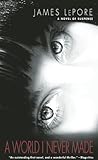
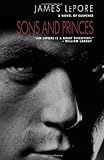
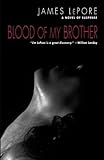
Jim gifted his three novels, A World I Never Made, Blood of My Brother, Princes and Sons and the prequel, Anyone Can Die, to me earlier this year. I was so thrilled to receive them I dove right in.


The suspense and emotion he so adeptly imparts to his readers is stunning. The depiction of the action and narrative of the scenes is so vivid I felt I was there with the characters.

I felt such a strong connection to the characters in all of the novels it surprised me…that is until I read Sons and Princes.


Before you think otherwise, I hasten to add that I enjoyed Sons and Princes just as much as all of the others it’s just that there wasn’t the connection with the characters for me that had been there in the other works. 


Sons and Princes had all of the plot twists, suspense and emotion that Mr. LePore is so skillful at strategizing, I’m not really sure what the problem was; maybe it was the mafia connection I wasn’t able to relate to.


Skillful strategizing, plot twists, strong emotion, continual action equals a novel by James LePore and shouldn’t be missed!


Find James LePore’s Novels at Amazon.com
http://jamesleporefiction.com
Signature

Wednesday, August 10, 2011

Western Mystery Series, 5 Popular Writers Set In the West By Linda K. Murdock

Expert Author Linda K. MurdockLately I've been hooked on the C. J. Box series set in Wyoming, which read like a modern day western. I'm up to the fourth book, Trophy Hunt, and I still find myself enjoying not only the mystery as it is plotted, but also Box's ability to describe the West as it really is with the quickly changing weather patterns, the creeks, canyons and animals. He does this through his main character Joe Pickett, who is a game warden in a state with more antelope than people. Joe is a family man with children, something you don't see too often in hard-boiled mysteries. Some of the murders are gruesome, but it does remind us that man, too, is an animal. The series began in 2001 with Open Season.

Nevada Barr is another author I consider a Western writer. Her main character, Anna Pigeon, works as a kind of police officer for the National Park Service. She travels from park to park from the Guadalupe Mountains in Texas to Mesa Verde in Colorado to Glacier National Park in Montana. She includes other parks east of the Mississippi River and her latest book,Borderline, actually takes place in the big city of New Orleans. She is mostly a loner, who lost a husband early in life and marries again later in the series. Her mysteries involve the landscapes of the parks, where she is assigned, and they often give you insights into the world of the National Park system. Her first book in the series is Track of the Cat published in 1993.

If you enjoy a lighter outlook on city life in the West, I recommend William Bernhardt with his legal thrillers set in Tulsa, Oklahoma. Bernhardt airs his concern about legal topics by introducing Ben Kincaid, a lawyer of lost causes. He seems like a bungler, but overcomes many legal obstacles and wins his cases, which involve everything from capital punishment to hate crimes and from child abuse to environmental concerns. There are many books in the series, which began in 1991 with Primary Justice.

Diane Mott Davidson sets her amateur sleuth Goldy Schulz in a small mountain town near Denver, Colorado starting with Catering to Nobody (1990). Goldy is starting a new catering business after divorcing an abusive husband. She has an awkward, yet charming eleven-year-old son Arch, who often steals the show. It doesn't hurt her sleuthing that she later marries the local sheriff. Although I'm not a big fan of cozies, these are better than most and they include the catering recipes. Time goes slowly in this series. It takes eight books for Arch to age four years.

For those of you who like psychological mysteries, you may want to try Stephen White's series set in Boulder, Colorado. Boulder is a college town near Denver and White's character Alan Gregory has a practice there. My husband likes this series (more than I do), because Gregory is a fallible every man, steadfast and loyal to those close to him. He is a soft-boiled hero that rather clumsily gets to the answers through his people skills and his training as a clinical psychologist. This series also begins in 1991 with Privileged Information.

There are numerous mystery series set in California, and J. A. Jance has two series set in Arizona, both of which beg for more disclosure in future articles. But these five should keep you busy for a while.

Copyright 2011 by Linda K. Murdock, the author of Mystery Lover's Puzzle Book, Crosswords with Clues from Your Favorite Mystery Series. Her book is a mini-anthology that includes reviews of 29 award-winning writers, who do mystery series. A check-off list of all the series' titles, along with a puzzle for each series, are included. See a sample crossword and learn more at http://bellwetherbooks.com

Article Source: http://EzineArticles.com/6466351

Wednesday, August 3, 2011

Author Alex Adena Talks About Writing ‘Signs & Wonders’, being a “user of nom de plumes” and Alfred Hitchcock

AlexAdenaThank you for spending time with us and sharing some insights into the writing of ‘Signs & Wonders’. If you’re ready I guess we should jump right in.

Lynnette Phillips: What inspired this novella? Is this your writing debut?

Alex Adena: I’ve written for the stage as well as a few screenplays, but this is my first novella. “Signs and Wonders” actually started out as a screenplay. I wanted to write a story about the nature of faith and what happens when you begin to doubt everything you’ve been taught. This story takes that to an extreme – what happens when everything in your life has been a lie and you have to start over from scratch?

LP: Some authors have told me that they build their charactersSigns and Wonders based on people they know. Is that how Annie Grace came to be? Or was there a formula you followed for character development? How did you come up with the characters in Signs and Wonders?

AA: Annie Grace isn’t based on a real-life person. The idea for her came when, out of curiosity, I watched a few minutes of Benny Hinn’s program. That’s when the idea came to me: What if a faith healer –- one who knew their act was a complete con – discovered they really COULD heal people? I knew my faith healer would be a woman because it’s an area dominated by men and I wanted to explore something new. So once I had this strong Texas woman, I thought it would be interesting to pair her up with a slightly older Latino man. Not as a love interest, but as a substitute father figure. That’s how Ernesto came to be. I did have a few actors and actresses in the back of my mind as I wrote some of the minor characters, which is a trick a lot of writers use.

LP: Do you maintain a writing schedule? When you pick up the pen do the ideas just seem to flow?

AA: A lot of my writing during the past few years has been done during furloughs from work. We would have to take a week off, unpaid, so I would stay home and write. That’s how “Signs and Wonders” got its start this spring – probably half of it was written during that furlough week. After that, I set a goal to write at least an hour every day until it was completed.

LP: Do you have a favorite genre or style (short stories for example) that you you feel more comfortable writing?

AA: I’m definitely more comfortable writing novellas or short novels as opposed to epics. I’m never going to write 800 pages. I’d get bored and I think the reader would get bored. Until “Signs and Wonders” came along, I wrote material that was pretty edgy. But, you know, there’s a lot to be said for writing something that you can show your mother! Good stories can be told without a single word of profanity. My next book will be a sequel to “Signs and Wonders” and then I plan to write a family friendly romantic comedy.

LP: Is there a particular genre, maybe mystery or a who-dun-it,that you would like to try your hand at writing?

AA: Someday I’d like to give science fiction a shot, something in the style of Philip K. Dick.

LP: You claim to be a “user of nom de plumes”…why is that? When do you use them?

AA: Authors have to market themselves these days, especially if they self-publish, so I wanted a pen name that was Google-friendly. My birth name (Jeffrey Bruner) is also the name of a college professor in West Virginia, so I created Alex Adena. Search for Alex and the only thing that pops up is my blog and Facebook page.

LP: As an aficionado of Alfred Hitchcock do you have a favorite Hitchcock movie? Do you watch old reruns of his television show? (Even when I was very young I loved the way he could supply us with an off-the-wall mystery every week and have the culprit dealt [not always by traditional punishment measures] with in so short a time.)

AA: I never got into the television show, but I’ve seen all of his films. My favorite is definitely “Rear Window,” with Jimmy Stewart and Grace Kelly. The dialogue really crackles and the filmmaking, the technical side of things, is extraordinary. I never tire of seeing the scene known as “The Kiss,” when the characters meet for the first time. Hitchcock also created such an extensive body of work that a lot of films get overlooked. “Shadow of a Doubt,” with Teresa Wright and Joseph Cotten, is a real masterpiece about good and evil, all set in a quaint California town. It’s definitely worth watching if you’ve never seen it.

Thank you Alex…”Rear Window” is one of my favorites too; Raymond Burr was great as the husband. I’m going to have to take another look at “Shadow of a Doubt” though; I guess it’s been too long since I watched it. I don’t have a lot of memories of movie except that Teresa Wright was very young.

See the review of ‘Signs & Wonders’ now available on Amazon.com

Email: adena.alex@yahoo.com
Twitter: @alexadena
Facebook:
www.facebook.com/authoralex

Saturday, July 23, 2011

Author Ivory Simone Talks About Her Novel ‘Havasu Means Blue Water’, Living in Bangkok and the “legacy of injustice”

Listen to internet radio with Lynnette Phillips on Blog Talk Radio

Havasue_Means_Blue_Water_cover

Lynnette Phillips - What inspired you to write Havasu Means Blue Water?

Ivory Simone - My family history. I grew up listening to my grandfather who told me stories about his grandfather--a black Indian who came out of slavery as a boy.  I found a 1780s census record with my great-great-grandfather's name and background information. The record confirms my grandfather's oral history was correct. This family history took on new meaning when I worked for a Native American Tribe years later. Both of these invents laid the foundation for Havasu Means Blue Water.

LP - Does "havasu" mean blue water?Ivory-Simone

IS - Yes, it does. In the Mojave language it means "blue water". One of the characters in the story is a descendant of a Mojave tribe decimated by disease and other anti-Indian government policies.

LP --Why should readers buy your book?

IS -- It's a snapshot of the cultural wars we see in the Southwest--in places like my home state of Arizona. The inhabitants of the fictional town of Wilburn, Arizona are threatened by outsiders. They have a history of crushing groups who are different. However, the violence unleashed against outsiders is also used against the women and children of the town. Hate is a monster that's never satisfied. When it runs out of enemies to eat, it'll start devouring its own. Havasu Means Blue Water is a cautionary tale about the price a society pays for remaining passive in the face of racial and cultural intolerance.

LP -- "The legacy of injustice" will be the topic in two author facebook chats that'll be held on July 10th and July 16th at 3:00 p.m. (EST). Why is this an important issue?

IS - I want people to think about what happens to a community when a grave injustice is allowed to fester. I want people to talk about what they can do to promote the healing of any festering wounds of injustice that divide and weaken their own communities. Justice is not optional--it's essential to the well-being of a community and its people.

LP -- The love between the two murdered victims, Mary Alice and Nathaniel Venerable, is central to the novel, why?

IS -- I believe love is the greatest force on earth. It's far greater than hate, far greater than the tyranny of violence. We first meet Mary Alice and Nathaniel as victims. However, I want readers to remember them for the deep love they shared. It's their love story that reaches out from the grave to influence the living, to propel events that bring about change.

LP -- Mother-daughter relationships are also explored quite a bit in the novel. The relationship between Lyla Amir, the heroine of the story and her mother and the relationship between Amber Goody and Bonnie Good, a dysfunctional daughter and mother--are both important threads in the plot. Why?

IS -- I'm a daughter and a mother of daughters. A daughter's relationship with her mother helps determine the type of women she'll grow-up to be. I wanted to show how certain acts and omissions mothers/women make in their lives shape the women their daughters become.

LP -- Lyla Amir is an unusual heroine. She's an Arab-American of mixed parentage (her mother is African-American) investigating the murder of a black farmer and his wife. Her heritage is one of the story lines that adds tension to events that unfold in the novel. Why did you make her Arab-American.

IS -- Lyla Amir's heritage is important because I believe Arab Americans now understand what Black Americans already know--what it feels like to be an undesireable "other". Lyla self-identifies as black but she has racially ambiguous features. This presents problems for her when she goes to Wilburn. It's her Arab heritage that becomes the source of hatred and conflict for her.

LP - The question of identity is also one of the issues Firestone Matise, the descendant of Mary Alice and Nathaniel Venerable, faces, too. Why?

IS -- I think people are quick to label others based on appearance alone. I wanted to challenge the notion we can know a person's history based on his or her racial profile. Racial stereotypes get in the way of Americans' ability to form positive relationships with one another. The browning of America will make such thinking a liability in the future. I believe that's a good thing in the long run

LP -- What do you want readers to know about Ivory Simone?

IS - I'm a writer and poet who dreams a lot. I have a vivid and active dream life that makes my journey in the world fascinating and sometimes strange.

LP -- What's it like living in Bangkok, Thailand?

IS -- There's never a dull moment. More importantly, I'm able to move about in relative safety and ease.

To read my review of ‘Havasu Means Blue Water’ and more about Ivory Simone follow this link.

See the Ebook Trailer for ‘Havasu Means Blue Water’

Thank you Ivory for talking with us and for your wonderful novel ‘Havasu Means Blue Water’

Lynnette Phillips